Aug 5, 2026
Precision CNC Machining for Advanced Hardware
Precision CNC machining for AI hardware, liquid cooling and robotics components, with OEM custom manufacturing from prototypes to low-volume production.
Precision CNC Machining for Advanced Hardware
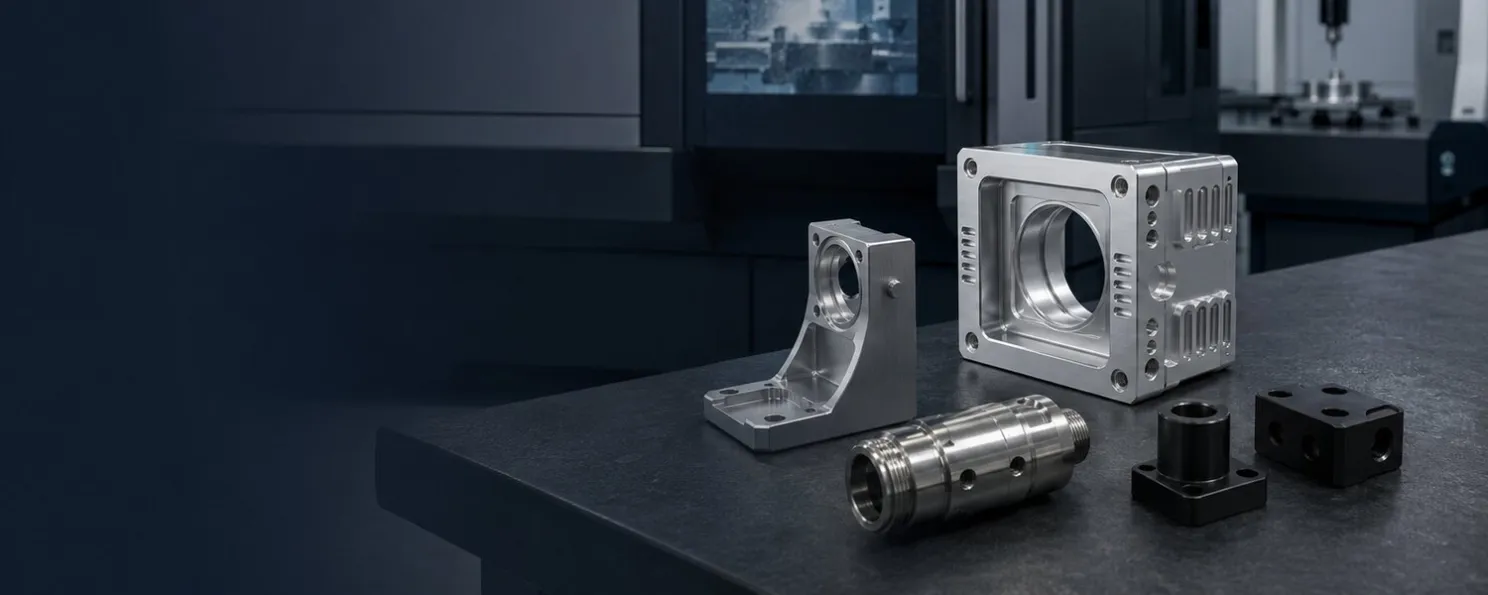
Get custom metal and engineering-plastic components for AI hardware, liquid-cooling systems, robotics, machine vision, and advanced equipment. We support one-off prototype evaluation and low-volume production through CNC milling, turning and 3-, 4- and 5-axis machining.
- 1-piece prototype evaluation
- 3-, 4- and 5-axis machining
- Metals and engineering plastics
- Selected tolerances down to ±0.01 mm when geometry, material and inspection conditions allow
- DFM review before production
Get Your Quote
Upload your 3D model and 2D drawing with quantity, material, finish, critical tolerances and target delivery date.
Precision Parts Built Around Your Requirements
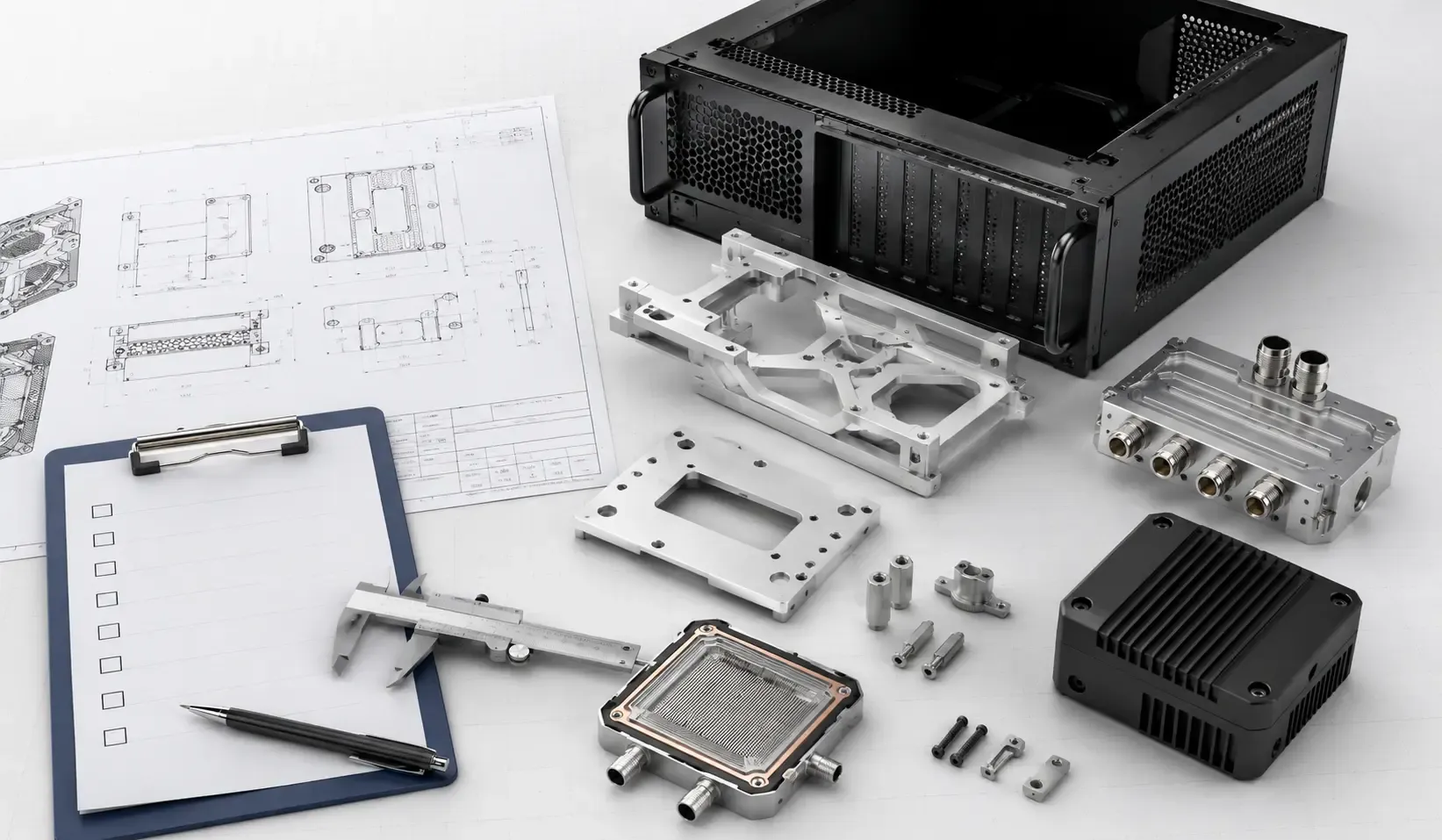
Advanced hardware parts often combine tight interfaces, thin walls, deep pockets, threaded features, sealing surfaces and cosmetic requirements. We review these requirements together before production—not as isolated dimensions.
Our machining scope includes milling, turning, drilling, boring, tapping and gear hobbing. DFM review covers tool access, internal radii, wall thickness, deformation risk, tolerance stack-up, finishing allowance and inspection method. This creates a practical route for prototype and low-volume builds.
Typical CNC Machined Components
- Precision brackets, mounting plates, frames and fixtures
- Housings, enclosures, covers and connector panels
- Shafts, sleeves, bushings, spacers and threaded parts
- Manifold bodies, valve blocks and sealing-interface plates
- Motor mounts, bearing housings and robot-joint components
- Camera housings, lens mounts, sensor mounts and optical bases
- Heat-spreading structures and thermal-interface components
- Engineering-plastic insulators, guides and supports
These are manufacturable part examples, not a fixed product catalog.
Applications
- AI servers and data centers: brackets, rail components, structural plates, cable-management parts and precision interfaces.
- Liquid cooling: manifold bodies, cold-plate components, pump mounts, valve blocks and sealing plates.
- Robotics and automation: joints, end-effector parts, motor mounts, bearing housings, sensor brackets and fixtures.
- Machine vision and optics: camera housings, lens mounts, optical bases, alignment fixtures and sensor mounts.
- Scientific and photonics equipment: optical mounts, instrument structures, positioning parts and custom mechanical interfaces.
- Edge AI devices: machined enclosures, connector panels, internal frames and heat-spreading components.
Materials
Category | Common grades or types |
Aluminum | 6061, 7075, 2024, 5083, 6063, 6082, 7050 |
Stainless steel | 304, 316L, 416, 420, 440C, 17-4PH, 15-5PH |
Carbon and tool steel | 1018, 1045, 4140, A36, D2, O1, A2, H13, S7, P20, NAK80 |
Specialty metals | Brass, copper, bronze, nickel, titanium alloys, Inconel |
Engineering plastics | ABS, POM, PC, PA, PMMA, PP, PEEK, PEI, PPS, PTFE, PVDF |
Composites | Carbon fiber sheet, fiberglass, G10, FR4 |
Material grade, condition, and availability are confirmed during quotation.
CNC Machining Capabilities
CNC milling is used for plates, brackets, housings, pockets, slots, hole patterns, and complex surfaces. Three-axis machining fits many standard geometries; 4- and 5-axis strategies can improve access to multiple faces and reduce setups.
CNC turning supports shafts, sleeves, bushings, rings, spacers and rotational housings. Drilling, boring, tapping and gear hobbing are selected according to the feature, tolerance and quantity.
Projects can start from one piece. After prototype or first-piece approval, the confirmed drawing revision, process route, and inspection requirements can support repeat and low-volume builds.
Surface Finishes
Available options can include anodizing, hard anodizing, bead blasting, brushing, polishing, painting, powder coating, plating, passivation, heat treatment, and laser marking.
Finishing can change final dimensions. Identify critical fits, sealing surfaces, grounding points, masked areas and post-finish tolerances before machining.
Tolerance and Quality Planning
Selected critical dimensions may be evaluated to ±0.01 mm when material, geometry, datum scheme, machining access and measurement method support it. The approved drawing and quotation define the acceptance criteria for each part.
Before production, we review:
- 3D model and revision-controlled 2D drawing
- Datums, tolerances, fits, threads and surface roughness
- Thin walls, deep pockets, distortion and tool-access risks
- Material, heat treatment, finish and masking requirements
- Inspection documents and delivery requirements
Measurement methods are selected for the part and project. Do not publish certification, equipment-ownership or report-format claims until they are confirmed with evidence.
From CAD Files to Finished Parts
- Share the 3D model, 2D drawing, quantity, material and finish.
- Receive DFM feedback on manufacturability, tolerance risk and inspection needs.
- Confirm quotation, drawing revision, documentation and delivery scope.
- Produce a prototype or first piece when design validation is required.
- Move approved parts into repeat or low-volume production.
Why Work With The Finer Parts
- Prototype and low-volume support for complex custom parts
- DFM feedback focused on cost, risk, inspection and assembly
- Coordination of milling, turning, multi-axis work and secondary processes
- Application-aware communication for advanced hardware projects
- Drawing, revision, finish and shipment requirements clarified before production
Request a Precision CNC Machining Quote
Send your CAD files for manufacturability and quotation review. For a more accurate response, include:
- 3D model and 2D drawing
- Prototype quantity and expected repeat volume
- Material grade and surface finish
- Critical tolerances, fits, and surface roughness
- Inspection requirements, target date, and destination country
Frequently Asked Questions
Can you machine one prototype?
Yes. Projects can be evaluated from one piece, subject to material availability and process feasibility.
What tolerances can you achieve?
Selected dimensions may be evaluated to ±0.01 mm when geometry, material, datum structure, process and inspection method allow. The approved drawing defines the applicable tolerances.
Which materials can you machine?
Options include aluminum, stainless steel, carbon and tool steel, copper alloys, titanium, nickel alloys and engineering plastics. Confirm the exact grade and condition during quotation.
Do you provide surface finishing?
Finishing options can include anodizing, bead blasting, polishing, painting, powder coating, plating, passivation, heat treatment, and laser marking.
What files should I send?
Send a 3D model and a revision-controlled 2D drawing, plus quantity, material, finish, critical dimensions, target date, and delivery destination.